
How EV fleets can ease grid overload with managed charging

Fleets that adjust their EV charging create benefits for themselves and their communities
In this blog series, we highlight findings from our Standard Review Projects and AB 1082/1083 Pilots throughout Evaluation Year 2024 (Year 4) – an independent evaluation of 12 active EV charging infrastructure programs and pilots across California, authorized by the California Public Utilities Commission (CPUC) with funding through investor-owned utilities. The report is the nation’s largest fleet evaluation, drawing on a wide range of data sources – including utilities, site visits, charging records, market data, and fleet operator surveys – and providing data on over 60% of the state’s class 3–8 electric vehicles (EVs).
California’s transportation electrification is accelerating. Between 2020 and 2024, utilities supported more than 200 commercial fleet charging projects, adding thousands of charging ports for medium- and heavy-duty EVs to communities throughout the state. This progress is critical for reducing emissions and advancing cleaner mobility, but is it possible to power these fleets without further overloading the grid?
A win-win for fleets and communities
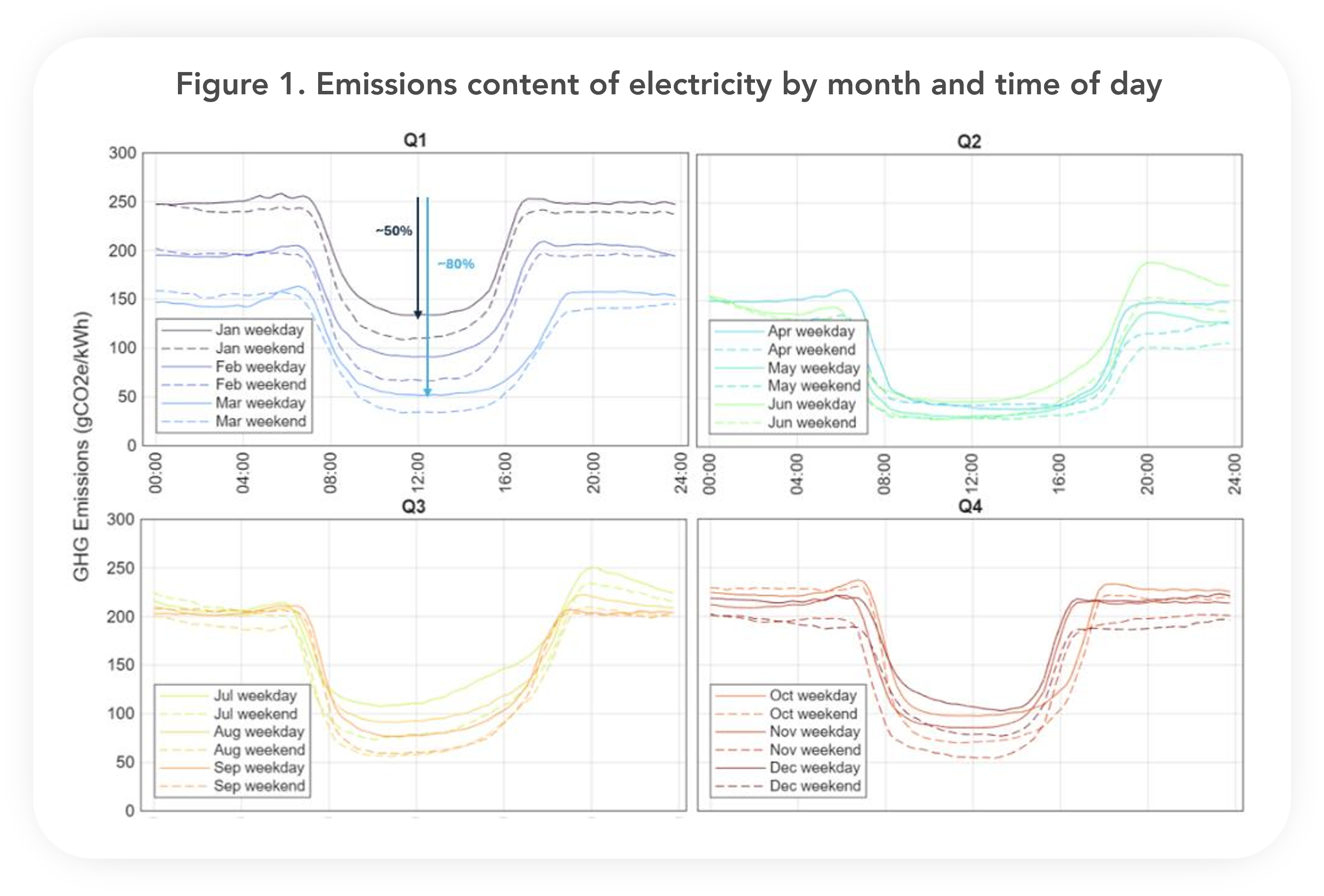
The latest evaluation from the CLEAResult Energetics team offers a clear solution: managed charging. When fleets shift charging to off-peak hours and even slow it down, they save on energy bills. This also reduces grid stress and aligns consumption with renewable energy production. Fleets that shift charging from night to midday when electricity is cleaner can save over 60% of associated emissions (see Fig. 1). The team’s reporting estimates that widespread managed charging adoption could save these fleets on average 28% annually and reduce greenhouse gas emissions by over 10%. Actual pricing is often 50% lower than during the 4–9 PM window.
Benefits extend to wider communities
Installed charging capacity for medium to heavy duty vehicles now exceeds 165 MW statewide in this portfolio, and monthly energy consumption continues to climb. When fleets charge outside the hours of 4–9pm, it supports the grid and helps to mitigate costs for all ratepayers.
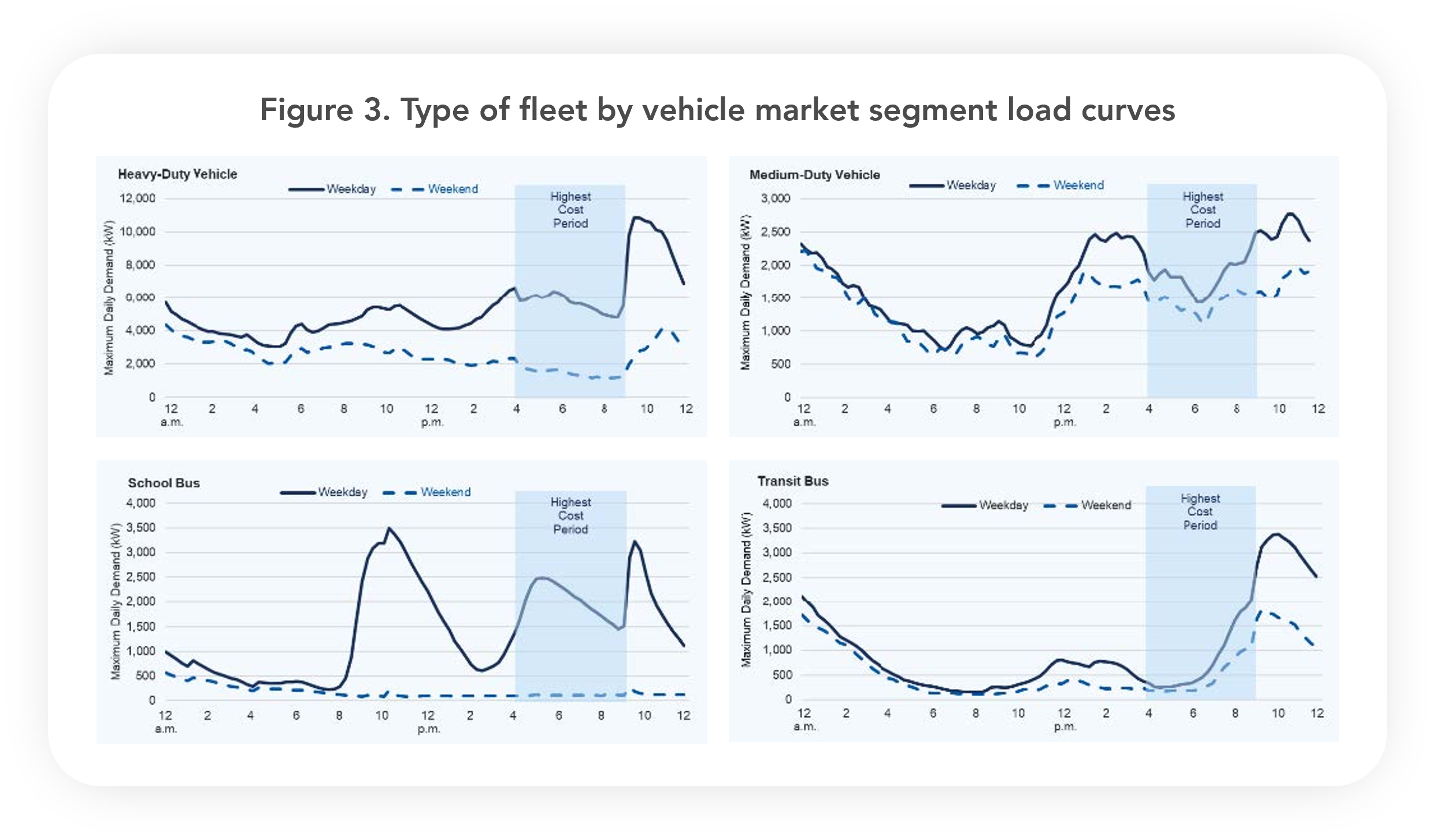
The team’s latest evaluation shows that barely 25% of fleets adopted charging management. Four main fleet types were disaggregated to show their varying ability to participate in this charging pattern on weekdays and weekends. If they do so, measurable benefits include lower utility bills and reduced grid congestion, which helps avoid costly utility infrastructure investments that could otherwise raise rates for everyone.
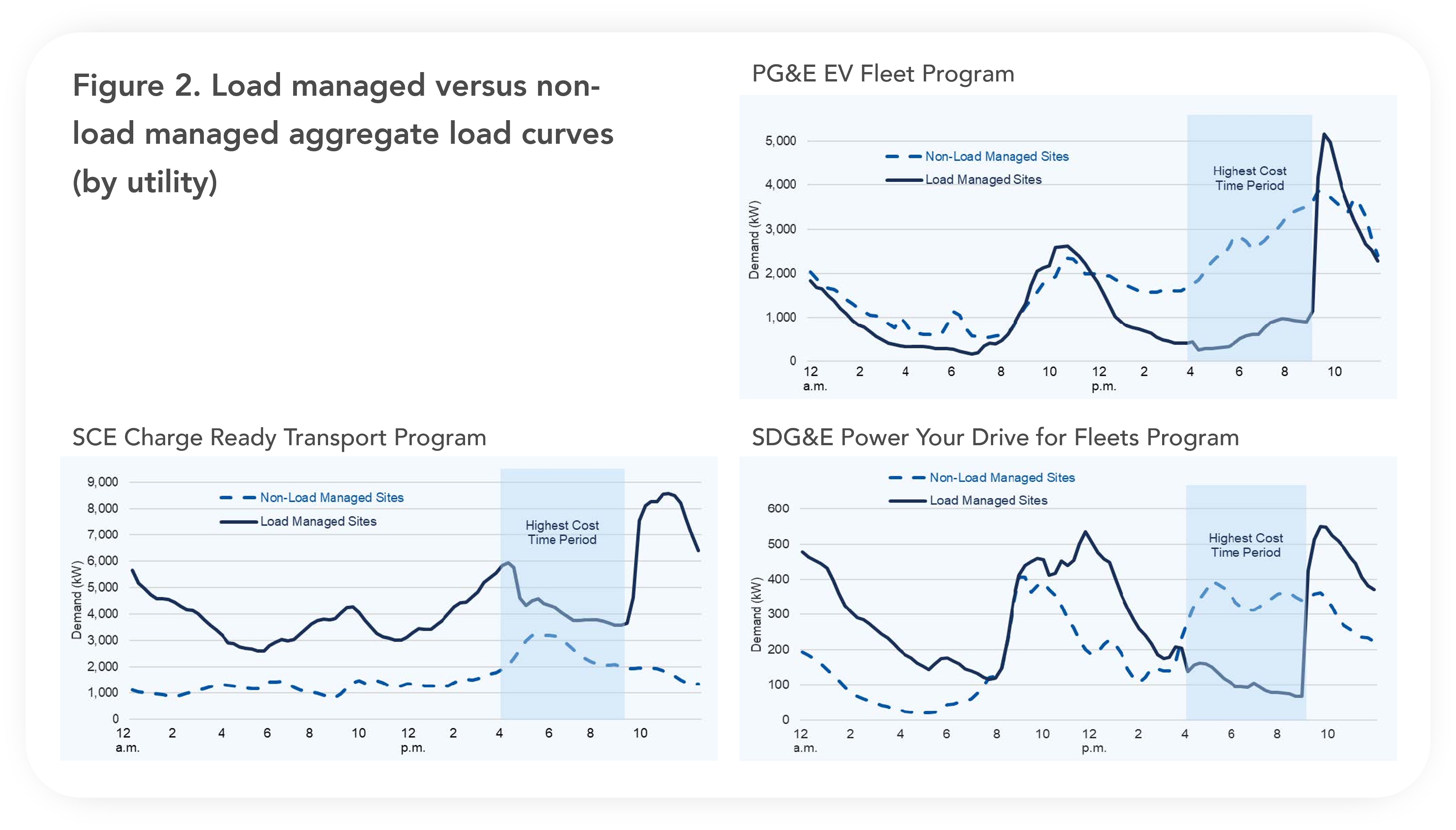
Figure 2 illustrates how electricity demand differs between load-managed and non-load-managed sites. At load-managed sites, charging is delayed from 4–9pm and ramps up after 9pm, when prices drop. In contrast, non-managed sites show a spike around 5pm, coinciding with when vehicles return to their bases.
Which fleet types can participate
This series of charts show the average daily load curve for each of four vehicle market sectors in Q4 2024 and highlights variations that lead to notable differences in the amount of charging demand during the highest cost period of 4–9pm:
- School buses have the greatest flexibility. They have long idle windows midday when electricity is cheapest and cleanest, making them ideal candidates for managed charging.
- Heavy-duty vehicles consume the most energy and create the largest grid impacts. Even modest load shifting in this segment can deliver significant savings and reliability benefits.
- Transit and medium-duty fleets also show opportunities to reduce peak demand and costs with more precise scheduling.
Action items: What utilities and fleets can do next
Policymakers developing or managing funding programs must ensure that approved charging hardware and software support basic load management in order to remain eligible for program participation and receive full funding.
Stakeholders need to prioritize the transfer and retention of staff knowledge from planning through construction and into operations of EV charging projects. This can ensure they realize the benefits these vehicles can deliver.
For fleets, adopting smarter practices can generate long-term cost savings and support the surrounding community by easing grid demand. Stakeholders can take action to implement managed charging strategies that maximize these benefits.
CLEAResult Energetics is committed to supporting utilities and fleets through this transition. Follow us on LinkedIn for more findings and highlights from our latest evaluation report.